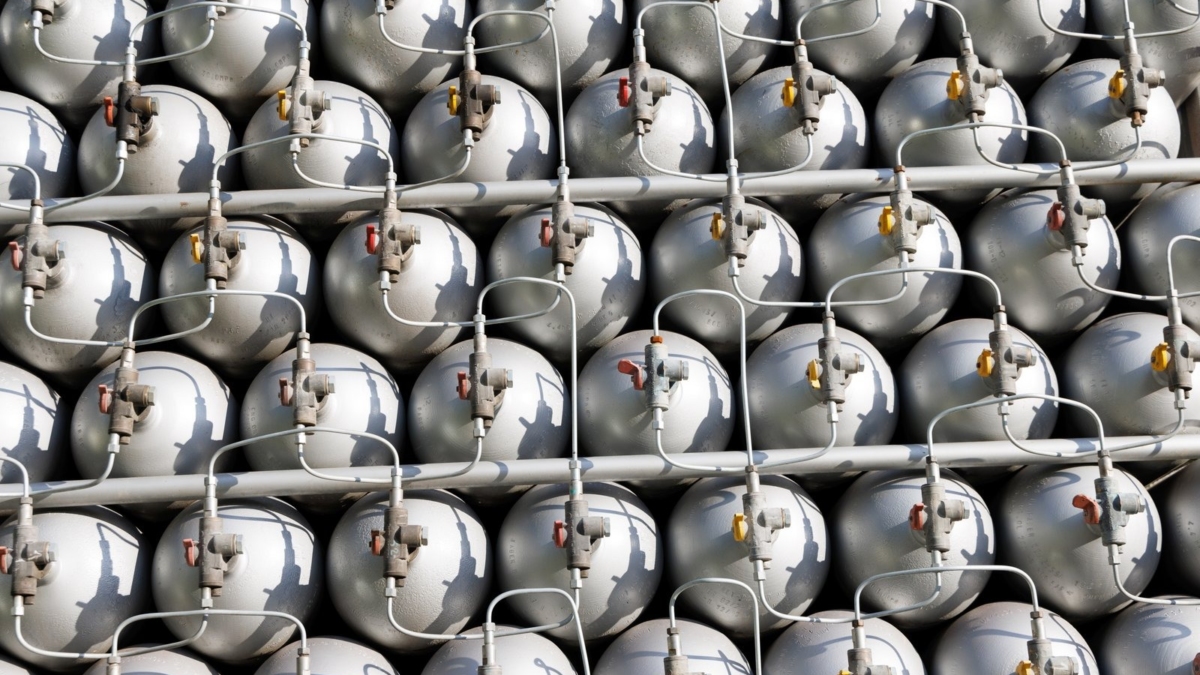
Helium isn’t just for birthday balloons. It’s the unglamorous backbone of your smartphone, your MRI scan, the chips in AI data centres, and the missiles protecting allied nations. And right now, the world is running dangerously low.
Seven months after Iranian strikes on a Qatari gas facility and the effective closure of the Strait of Hormuz, the global helium supply chain is buckling — with no clear end in sight.
Here’s why it matters:
- One-third of the world’s helium supply was trapped in the Persian Gulf when the Strait of Hormuz closed in February.
- Qatar’s Ras Laffan — the world’s largest natural gas facility, and its helium byproduct — was then hit by Iranian strikes in March. The Qataris say full operations are at least three years away.
- Qatar is the world’s second-largest helium producer. The bulk of remaining global supply now falls to a single facility in Wyoming.
- Spot helium prices have tripled since the war began, according to Rich Brooke, a former executive at Air Liquide.
- US helium exports have surged 70% as South Korea, Taiwan, and Singapore scramble for supply — but the US can’t plug the gap indefinitely.
- The semiconductor industry consumes one-fifth of the world’s helium. At chip manufacturer Polar Semiconductors, 40–50% of fab machines use helium in some way. No helium, full stop.
- University research labs developing cancer drugs and Alzheimer’s treatments are already on rationing — one lab was told it would receive just 50% of last year’s supply.
- The Pentagon has asked some defence contractors to quadruple weapons production capacity. Problem: helium is essential for manufacturing hypersonic missiles, fibre optics, and military electronics.
Unlike oil, helium can’t be recycled from the atmosphere. Once it escapes into the air, it’s gone — permanently. The supply is concentrated in just five countries: Algeria, Poland, Russia, Qatar, and the US.
The road ahead: The helium crunch is a slow-motion crisis that most people won’t notice until something breaks — a hospital can’t run MRI scans, a chip fab goes dark, a defence programme stalls. How long the Strait of Hormuz stays closed will determine how bad it gets. And right now, nobody’s making that call.