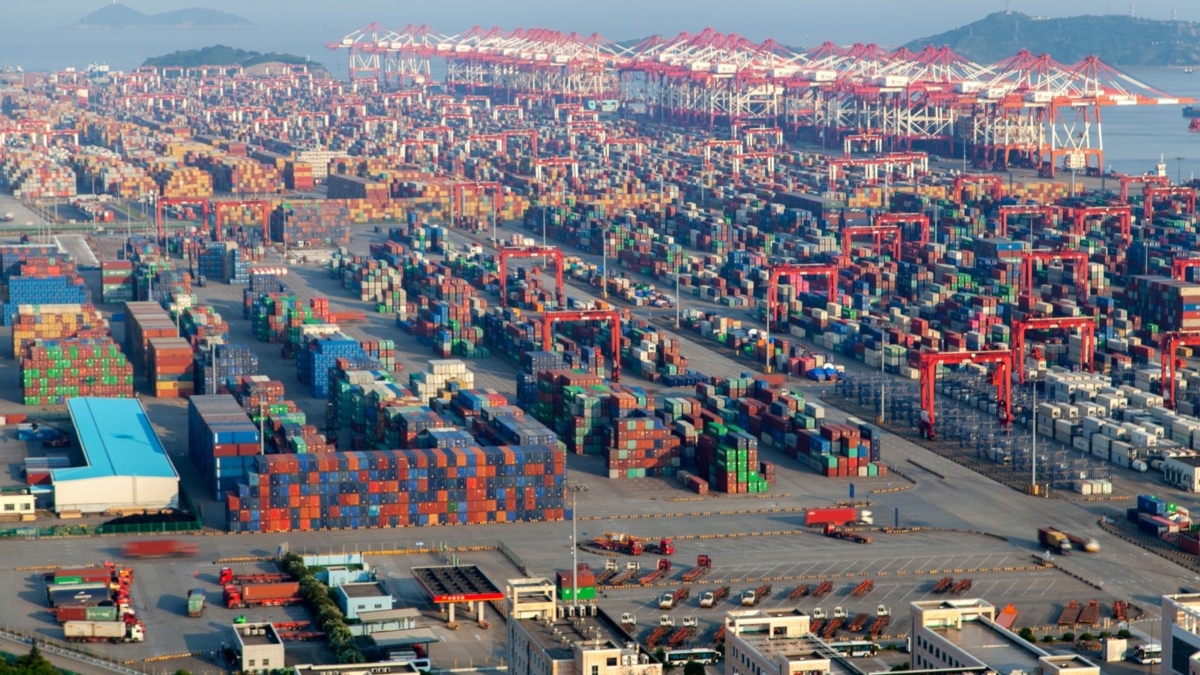
Five typhoons in five weeks have turned China’s busiest ports into a parking lot for container ships — and the backlog is now officially bigger than anything we saw during COVID.
Global container port congestion has hit an all-time high of 4.31 million TEU, blowing past the records set during the pandemic era. North Asia is doing the heavy lifting (or rather, the heavy blocking), accounting for roughly 50% of that backlog — around 2.2 million TEU sitting at anchor, waiting for a berth that may not come for days.
The culprit? A relentless typhoon conveyor belt. Storms Bavi, Noul, Dolphin, Narra, and now Saudel have taken turns battering China’s coastline over the past five weeks. The latest, Typhoon Saudel, forced all container terminals at Ningbo-Zhoushan — one of the world’s busiest container gateways — to suspend operations as of August 26. Shanghai, meanwhile, enacted full mandatory port clearance protocols, sending vessels scrambling to designated anchorages.
By the numbers
- Berth waiting times at Ningbo are running 5–6 days, with Meishan Terminal at 100% capacity and outer anchorages fully saturated
- Shanghai’s major terminals are seeing waits of 8–9.5 days, with over 139 container vessels anchored offshore
- Shanghai–US West Coast spot rates are holding above $7,000 per 40ft; East Coast routes have crossed $10,000 per 40ft
- Forwarder CH Robinson is warning shippers to expect late arrivals, vessel omissions, rolled cargo, and container shortages
- MSC’s 8,400-TEU vessel MSC Silvana VIII ran aground near Zhoushan during Typhoon Dolphin and is at risk of sinking
- Even regional hubs are feeling the squeeze: Busan yard utilisation sits at 80%, Port Klang at 85%
Looking ahead…
Recovery is expected to take weeks, not days. Even once the skies clear, vessel bunching and yard backlogs will ripple through feeder networks, air freight capacity, and inland logistics well into September. Logistics providers are urging shippers to build in 7–10+ day buffers for any East China bookings — or start exploring air alternatives now before those rates climb too.